mature field technology monitoring
Microseismic and Distributed Fiber Optic Sensing technologies are synergistic when used together. While microseismic monitoring offers a macroscopic view of subsurface fractures and seismic activity, DFO provides detailed, continuous wellbore data. Together, they provide a comprehensive picture of both the reservoir and wellbore conditions, leading to better-informed decisions, optimized production, and enhanced safety in oil and gas operations.
Microseismic Monitoring
Microseismic events plotted along with the reservoir grid with production and seismic data for context. By combining these data, CoViz 4D can aid in the understanding of reservoir heterogeneity and fracture systems.
Microseismic monitoring is helping reservoir engineers plan and execute more effective stimulations to maximize recovery. Over the past two decades, innovations in surface array and downhole geophone technologies—combined with algorithms that filter “noise” from sources such as pumping and surface operations—have improved the accuracy of locating and characterizing microseismic events. As a result, reservoir engineers can create grids that more accurately depict fracture height, extent, azimuth, asymmetry, and dip and use this insight to further improve fracture/stimulation strategies and field development.
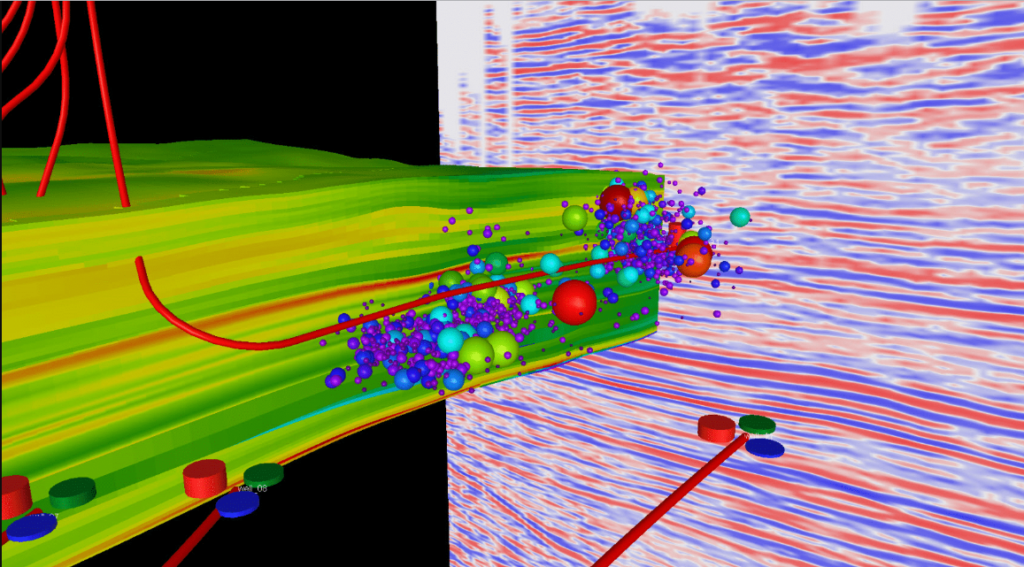
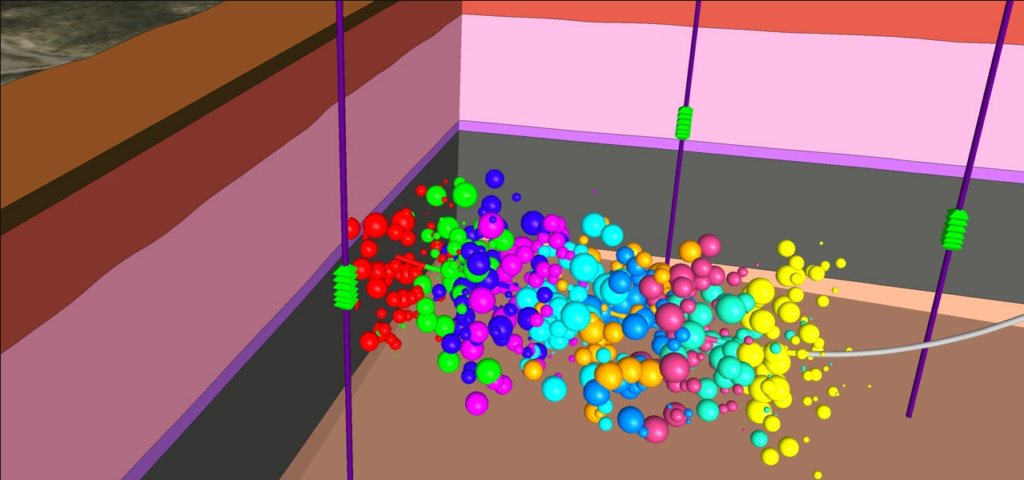
Microseismic events plotted along with the reservoir grid with production and seismic data for context. By combining these data, CoViz 4D can aid in the understanding of reservoir heterogeneity and fracture systems.
Microseismic monitoring is helping reservoir engineers plan and execute more effective stimulations to maximize recovery. Over the past two decades, innovations in surface array and downhole geophone technologies—combined with algorithms that filter “noise” from sources such as pumping and surface operations—have improved the accuracy of locating and characterizing microseismic events. As a result, reservoir engineers can create grids that more accurately depict fracture height, extent, azimuth, asymmetry, and dip and use this insight to further improve fracture/stimulation strategies and field development.
Distributed Fibre Optics
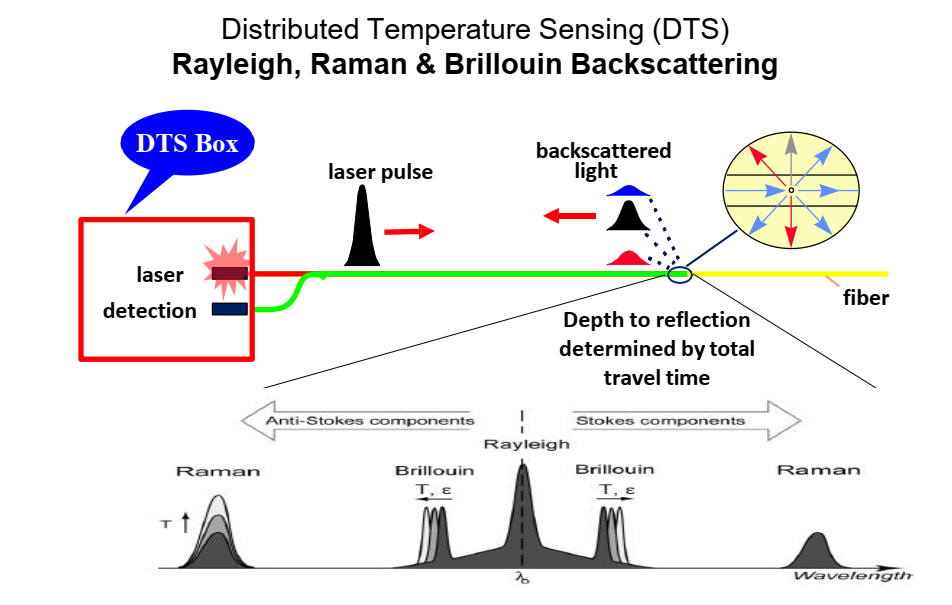
(DTS – Distributed Temperature Sensing):
- Used in wellbore monitoring to detect temperature changes that indicate fluid movement or leaks.
- Essential for geothermal and oil & gas operations, where understanding temperature variations can guide operational decisions.
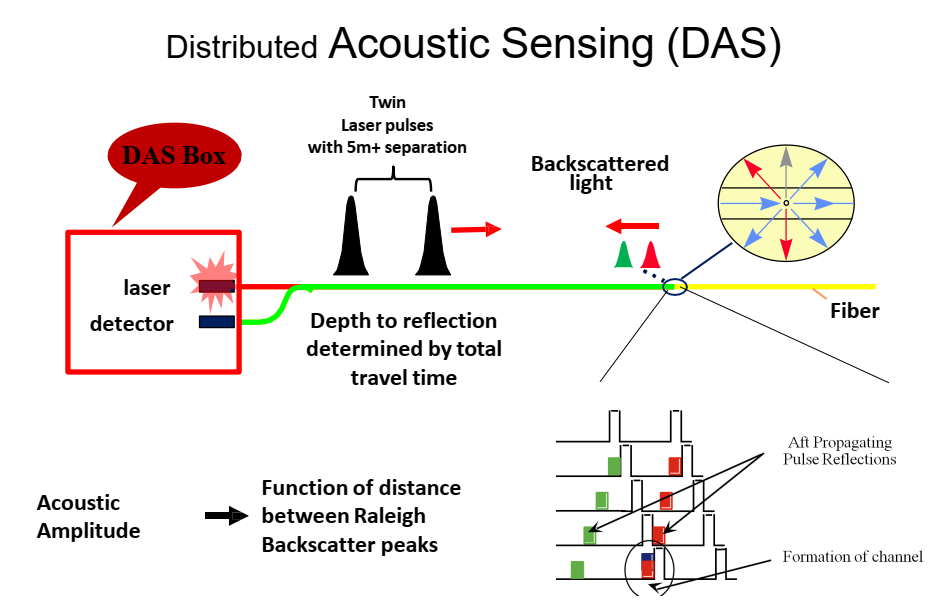
(DAS – Distributed Acoustic Sensing):
- Used for detecting acoustic signals along the fiber, useful in monitoring pipeline integrity, detecting leaks, and seismic activity.
- Can also be used for security purposes, such as perimeter monitoring and intrusion detection